From March 12 to 14, India's NXT Conclave 2026 was held in New Delhi. The conclave's agenda spanned a wide range of fields including artificial intelligence, quantum computing, health, green energy, governance, space, law, transportation, sports, media, and finance, while also showcasing India's infrastructure development, digital transformation, and social innovation.
Indian Prime Minister Narendra Modi, former Australian Prime Minister Scott Morrison, India's Minister of Railways and Minister of Electronics and Information Technology Ashwini Vaishnaw, and Minister of State in the Prime Minister's Office Dr. Jitendra Singh attended the conclave. Parliamentarians from 30 countries took part, including the United Kingdom, France, Germany, Australia, Denmark, Bhutan, Sri Lanka, and the Maldives. The conclave also brought together experts and scholars from leading universities worldwide, including Harvard University, the Massachusetts Institute of Technology, the University of California, Berkeley, Stanford University, the University of Oxford, the University of Cambridge, the London School of Economics, and Tsinghua University. Professor Zhu Xufeng, Dean of the School of Public Policy and Management of Tsinghua University (Tsinghua SPPM) and Executive Director of the Institute for Sustainable Development Goals of Tsinghua University (Tsinghua SDG Institute), attended the conclave.
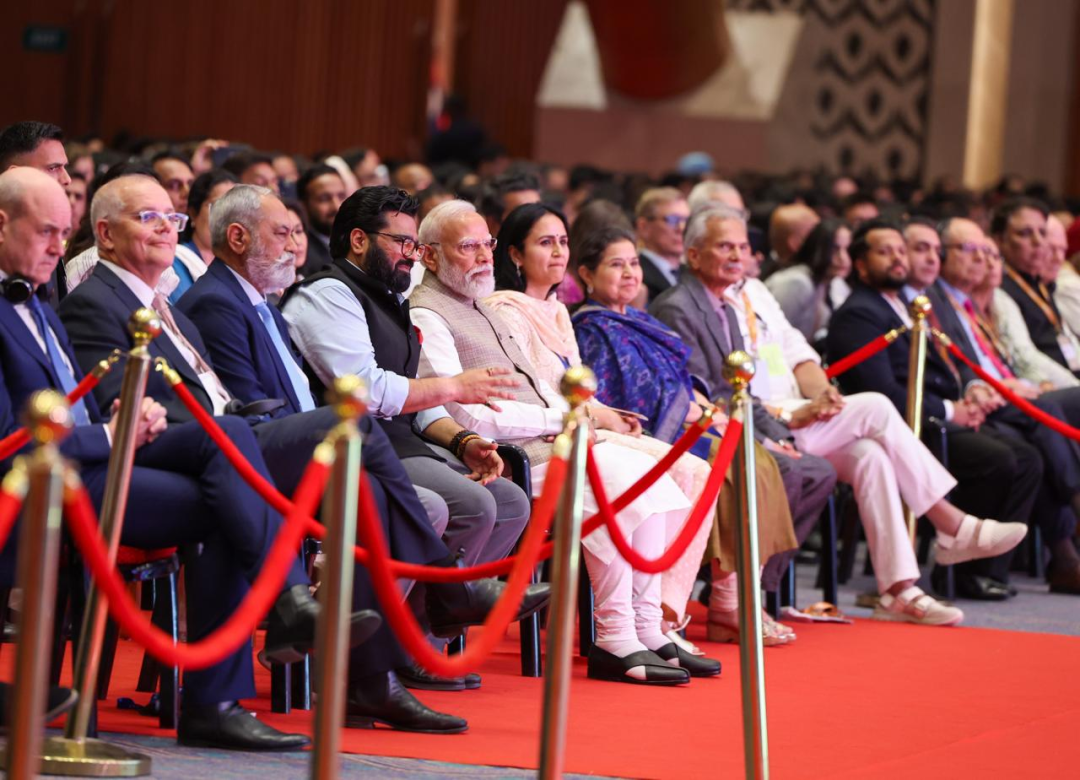
Indian Prime Minister Narendra Modi at the conclave
Prime Minister Narendra Modi delivered the keynote address. He noted that the ongoing US-Israel-Iran conflict has triggered a global energy crisis, disrupting global supply chains and affecting countries to varying degrees. He unveiled India's energy strategy, which includes expanding infrastructure to improve energy access and strengthening domestic capacity to reduce reliance on imports. He also called for responsible public discourse during this period of global uncertainty, urging that unnecessary panic over energy supply be avoided.
During the conclave, Professor Zhu took part in two expert panel discussions: "The New World Order of Sustainability" and "Globalisation in a Multi-Polar World."
In the panel on "The New World Order of Sustainability," Professor Zhu joined Arvind Mahajan, Regents Professor at Texas A&M University. Zhu observed that AI is a transformative force driving global carbon neutrality, but its impact is dual-edged. On the opportunity side, AI can optimize energy system efficiency through big data, enable precise carbon accounting and monitoring, and enhance the transparency of carbon markets. Addressing the challenge of an aging population, Zhu argued that future societies will exhibit a trinity of "lower population, higher automation, and lower carbon emissions," with AI steering automated production toward greener, lower-carbon models. On the challenge side, the high energy consumption of AI training and the electronic waste generated by hardware turnover are intensifying environmental pressure. The global distribution of computing infrastructure is evolving into a form of "digital cross-border energy trade," a pattern that can geographically decouple sites of carbon emission from sites of economic benefit, raising questions of fairness and responsibility allocation in global climate governance. Zhu emphasized that AI is not inherently green; its contribution to sustainable development depends on governance choices, technological design, and international cooperation. The urgent task, he said, is to ensure that AI's rapid evolution is deeply aligned with global decarbonization goals, so that we can move together toward a sustainable digital future.
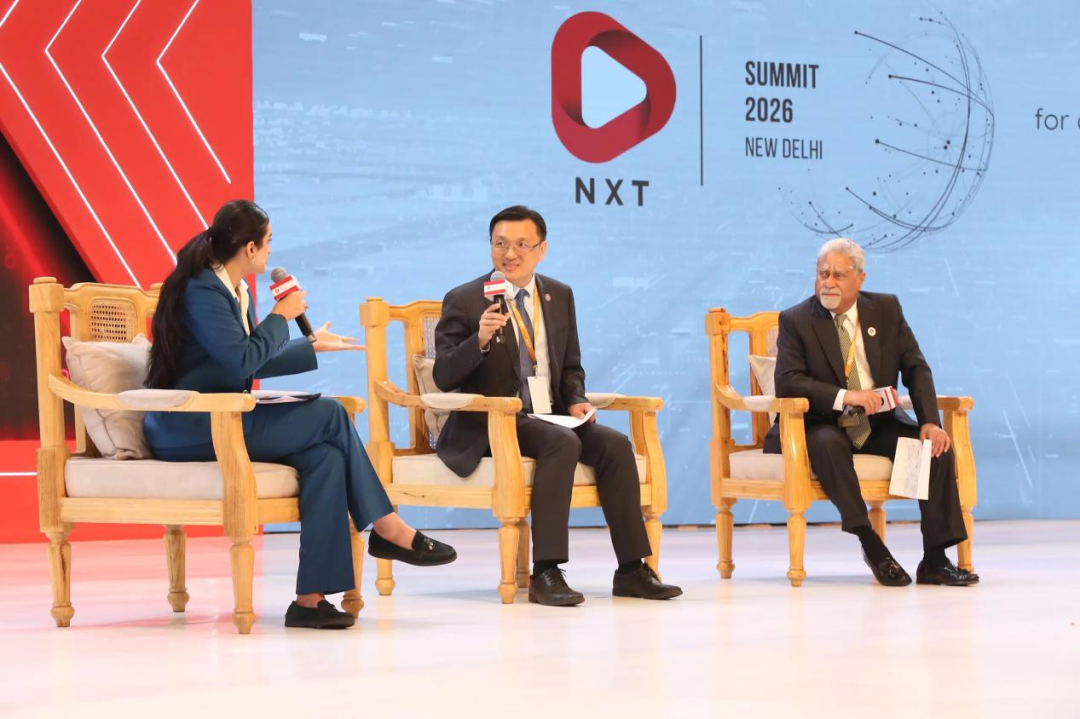
The "New World Order of Sustainability" panel in session
In the panel on "Globalisation in a Multi-Polar World," Professor Zhu joined Professor Nivi Manchanda of Queen Mary University of London, former US Ambassador to the Sultanate of Oman Marc J. Sievers, Professor Roberto Orsi of the Graduate School of Public Policy at the University of Tokyo, and Stephen M. Maurer, Adjunct Professor Emeritus at the Goldman School of Public Policy, UC Berkeley. The panel was moderated by senior economic policy expert and author Pranjal Sharma. Zhu argued that the world is moving toward a multipolar structure underpinned by China, the United States, Europe, and Russia, and that the underlying driver of geopolitical tensions is the structural imbalance in the global distribution of gains against a backdrop of slowing technological progress. Analyzing global trade through the lens of a multipolar system of "resources, production, and consumption," he examined the roles of the four major poles: the United States sustains its influence through a trinity of advantages, but its unilateralist tendencies have intensified supply-chain frictions; China, as the world's manufacturing powerhouse, is challenging existing value chains through industrial upgrading; Europe faces structural pressures on both energy security and competitiveness; and Russia continues to play a critical role as a resource pole. He also emphasized that, while the reshaping of the globalized order entails friction, human history shows that technological innovation and the expansion of frontiers are the keys to breaking the deadlock. Just as the Age of Exploration opened up global trade, the future development of space technology holds the promise of opening up new frontiers for growth. Major powers, he argued, should abandon zero-sum thinking and, through stronger technological cooperation and inclusive governance, steer globalization toward a more stable and mutually beneficial multipolar future.
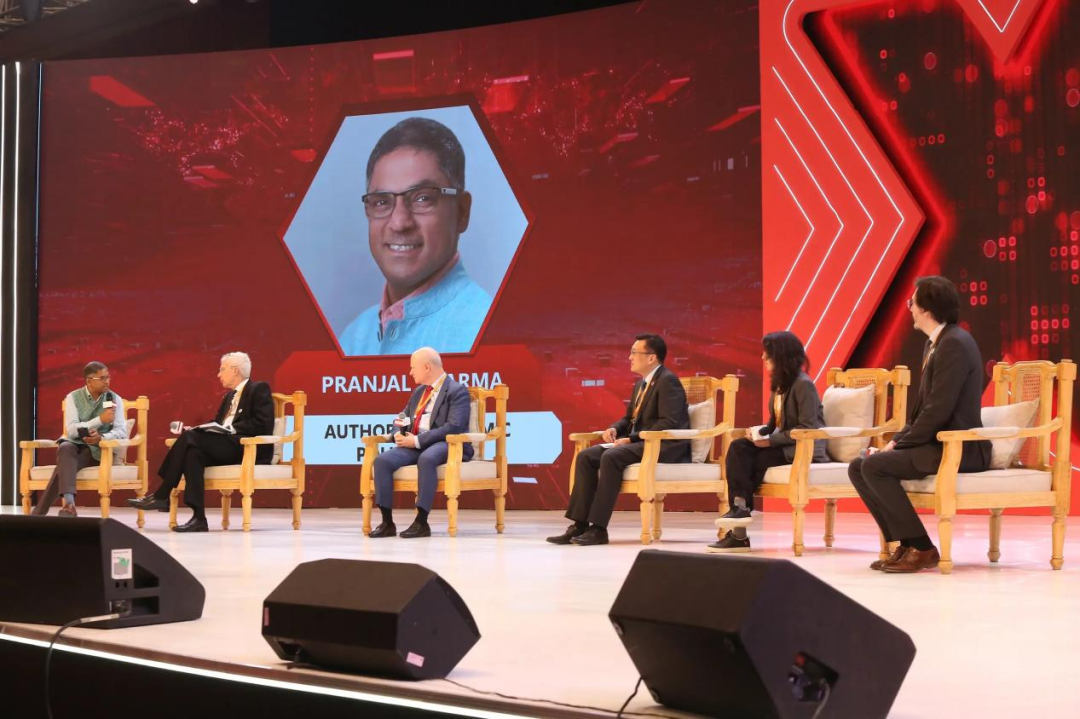
The "Globalisation in a Multi-Polar World" panel in session
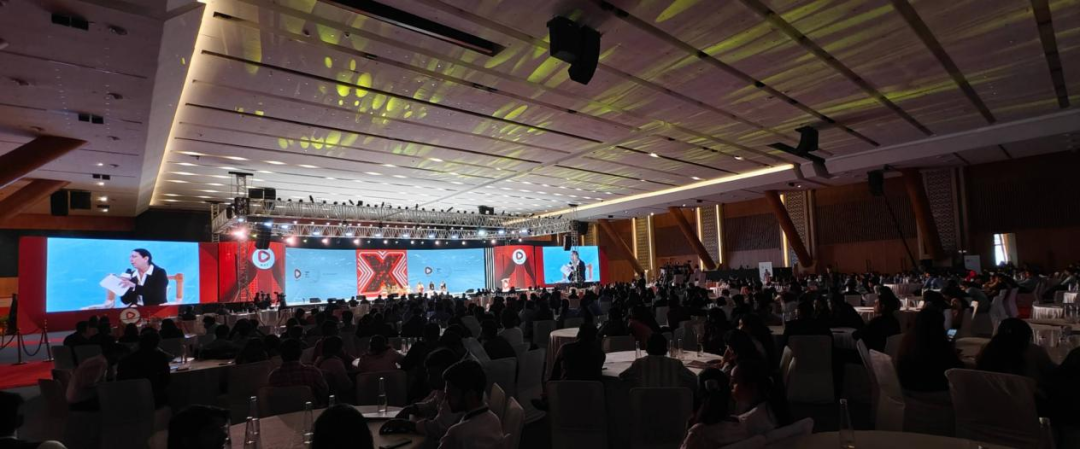
The conclave venue
The NXT Conclave was founded by Kartikeya Sharma, Member of the Rajya Sabha of India, as an annual world-class gathering designed to bring together global changemakers, shape pioneering initiatives for humanity's future, and connect India closely with the world.