On October 11, 2026, the 21st Tsinghua University Public Management Frontier Forum was held under the theme "Governance Modernization in the Digital and Intelligent Era." Organized by the School of Public Policy and Management (SPPM) at Tsinghua University, the forum featured six parallel sessions focusing on "The Global System, Mechanism and Rules of AI Governance," "Chinese Intellectual System and National Governance," "Emerging Technology Development and Risk Governance," "Empowering the Dual Control of Carbon Emissions with Digital and Intelligent Technologies Under the National Governance Framework," "The 15th Five-Year Plan and the Effective Investment Expansion," and "Governance Transformation in an Intelligent Society and the Building of a Law-Based Government."
The parallel forum on "Empowering the Dual Control of Carbon Emissions with Digital and Intelligent Technologies Under the National Governance Framework" was organized by the Institute for Sustainable Development Goals, Tsinghua University (TUSDG), and co-organized by SinoCarbon Innovation & Investment Co., Ltd. As an integral part of the 21st Tsinghua University Public Management Frontier Forum and a series of events celebrating the 26th anniversary of Tsinghua SPPM, the session was closely aligned with the main forum's theme of governance modernization in the digital and intelligent era. It aimed to support the implementation of China's strategic priorities during the 15th Five-Year Plan period (2026–2030), particularly the transition toward a dual-control system for the total amount and intensity of carbon emissions.
Distinguished guests attending the parallel forum included Professor Zhu Xufeng, Dean of Tsinghua SPPM and Executive Director of TUSDG; Tang Renhu, Chairman of SinoCarbon Innovation & Investment Co., Ltd. and Deputy to the 16th Beijing Municipal People's Congress; Fei Jingyao, Deputy Director of the Division of Resource Conservation and Environmental Protection at the Beijing Municipal Commission of Development and Reform; Tan Xianchun, Deputy Director of the Carbon Neutrality Strategy Research Center and Senior Research Fellow (Grade II) at the Institutes of Science and Development, Chinese Academy of Sciences; Guo Wei, General Manager of SinoCarbon Innovation & Investment Co., Ltd. and Professorate Senior Engineer; Associate Professor Zhu Junming, Associate Dean of Tsinghua SPPM and Deputy Director of TUSDG; Associate Professor Zhang Fang of Tsinghua SPPM; Zhang Yang, Head of the Department of Land Resources at Capital University of Economics and Business and Deputy Secretary-General of the China Society of Territorial Economists; Ma Zhen, Vice President of Yuehua Environmental Protection Group and an expert included in the expert pool of the Shandong Provincial Green and Low-Carbon Development Center; Wang Zhiyin, Director of the Green and Low-Carbon Division of the Strategic Planning Department at Sinopec; Tian Wang, Deputy Director of the Carbon Peaking and Carbon Neutrality Center at the Research Institute of PipeChina and Senior Engineer; and Mi Haiting, Director of the Data Center at Ningbo Power Supply Company, State Grid Zhejiang Electric Power Co., Ltd.
The parallel forum was moderated by Associate Professor Yin Chengzhi, Deputy Secretary of the CPC Committee of Tsinghua SPPM.
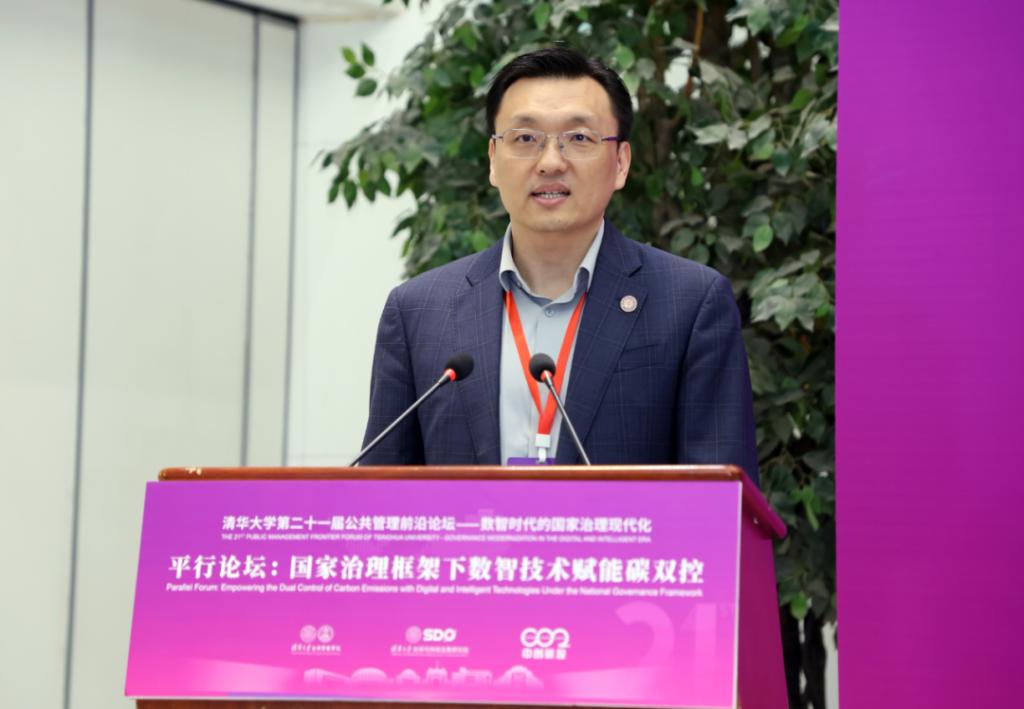
Opening Remarks by Professor Zhu Xufeng
In his opening remarks, Professor Zhu Xufeng noted that 2026 marked the beginning of China's 15th Five-Year Plan period, during which the country is accelerating its comprehensive transition from the dual control of energy consumption to the dual control of carbon emissions. This transition not only provides a critical institutional foundation for achieving China's carbon peaking and carbon neutrality goals, but also serves as an important driver of high-quality development and a key governance instrument for China's active participation in global climate governance and implementation of the United Nations 2030 Agenda for Sustainable Development.
However, Zhu emphasized that significant challenges remain in implementing the dual-control system for carbon emissions. These include how to scientifically allocate carbon reduction targets and ensure their implementation at different administrative levels, how to accurately measure and effectively evaluate carbon emissions, how to design incentive mechanisms that encourage high-quality development at the local level, and how to leverage digital and intelligent technologies to strengthen local carbon governance.
He stressed that these challenges represent not only important academic questions but also practical tests of governance capacity, making them central issues for discussion at the forum. He expressed his hope that the event would bring together insights from government agencies, universities, businesses, and local practitioners to generate new ideas and practical solutions for establishing the carbon emissions dual-control system and advancing high-quality development during the 15th Five-Year Plan period.
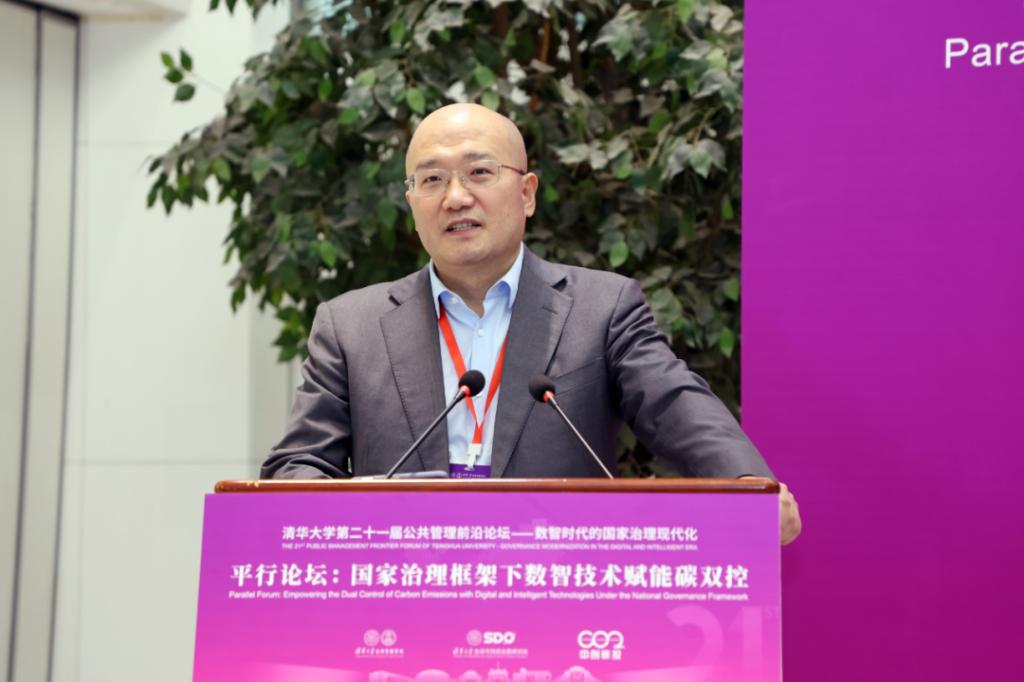
Opening Remarks by Tang Renhu
Tang Renhu observed that the parallel forum addressed two of the most critical dimensions of China's carbon peaking and carbon neutrality efforts during the 15th Five-Year Plan period: the governance framework and the underlying technological infrastructure.
As the dual-control system for carbon emissions and related performance assessments continue to advance, particular attention has been directed toward how local governments will implement these requirements, especially in preparation for the upcoming annual assessment of carbon peaking and carbon neutrality efforts.
Tang emphasized that achieving carbon peaking and carbon neutrality is, fundamentally, a transformation of national governance. The shift from the dual control of energy consumption to the dual control of carbon emissions, together with the transition from a primary focus on carbon intensity constraints during the 14th Five-Year Plan period to equal emphasis on total emissions and emissions intensity during the 15th Five-Year Plan period, calls for closer integration of carbon governance with broader economic and social development assessments. It also requires more granular and refined governance mechanisms. Such refined governance, he noted, depends on verifiable, traceable, and sufficiently granular data, as well as the application of artificial intelligence, large language models, the Internet of Things, remote sensing, and other advanced technologies. These tools can help transform traditional statistical practices based on manual reporting and multiple layers of review into intelligent governance systems capable of automated data collection, verification, and early warning.
Tang expressed his expectation that the forum would foster dialogue between theory and practice on the 15th Five-Year Plan's carbon emissions dual-control policies, carbon peaking and carbon neutrality assessments, and the institutional adaptation required for digital empowerment.
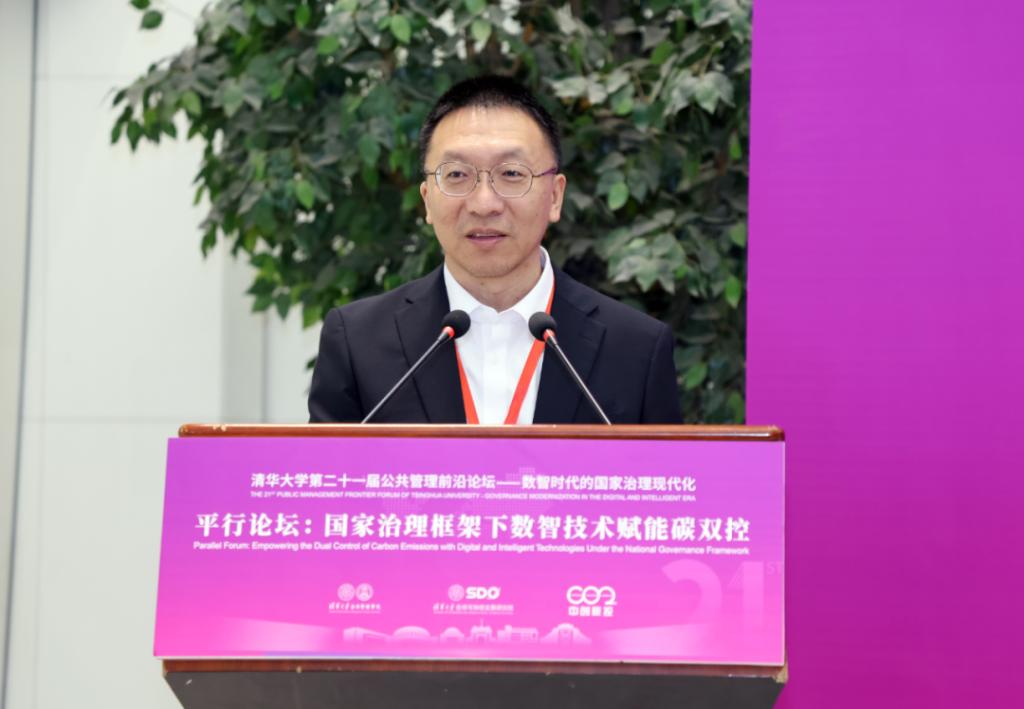
Associate Professor Yin Chengzhi Moderates the Parallel Forum
The keynote presentation session was organized around two themes: "Dual Control of Carbon Emissions During the 15th Five-Year Plan Period" and "Empowering the Dual Control of Carbon Emissions with Digital and Intelligent Technologies."
Four senior experts from academia and industry—Tan Xianchun, Guo Wei, Zhang Yang, and Ma Zhen—were invited to share their perspectives on policy interpretation, policy implementation, digital and intelligent empowerment, and local practices.
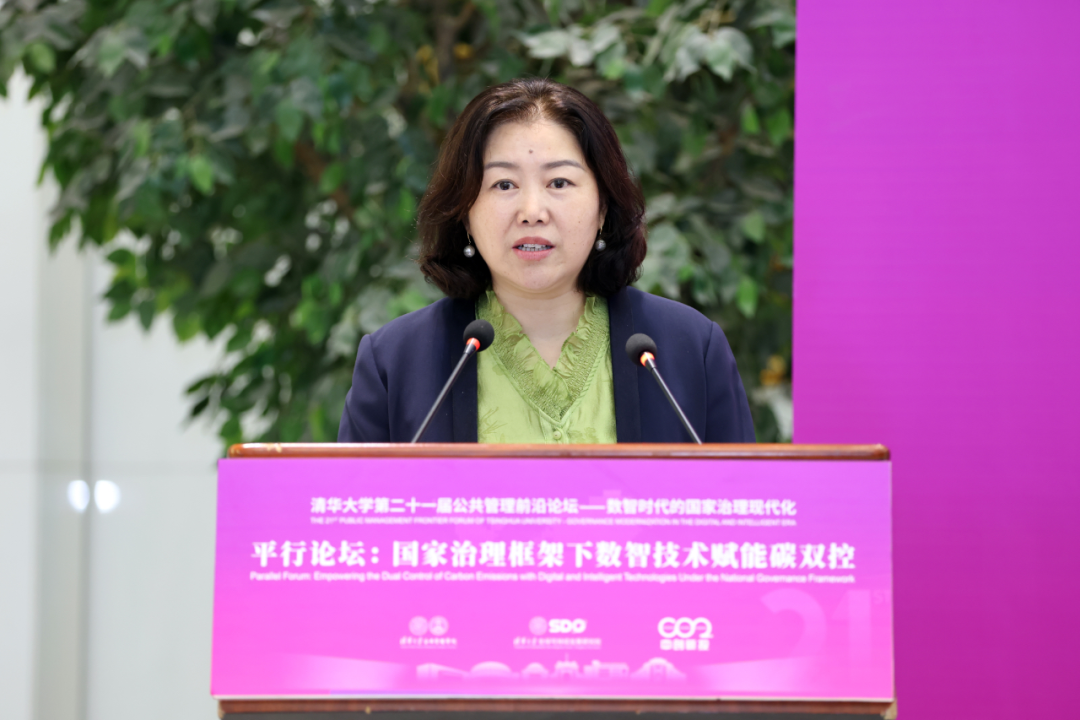
Keynote Presentation by Tan Xianchun
Tan Xianchun delivered a keynote presentation entitled "The Impact of Carbon Emissions Dual-Control Policies During the 15th Five-Year Plan Period on China's High-Quality Development."
She provided a systematic overview of the evolution of global climate governance and the development of China's carbon peaking and carbon neutrality policy framework. She observed that global climate governance is entering a new phase in which greater emphasis is being placed on the implementation of commitments rather than the formulation of targets alone.
Drawing on international experience in controlling total carbon emissions, Tan highlighted the necessity of establishing a total carbon emissions control system in China and its central role in facilitating the green and low-carbon transition.
She further explained that policies aimed at controlling total carbon emissions could promote the optimization of the energy mix and the upgrading of industrial structures. Such policies could, in turn, support innovation-driven development, coordinated regional and industrial development, and the green transition, thereby providing important support for China's high-quality economic development.
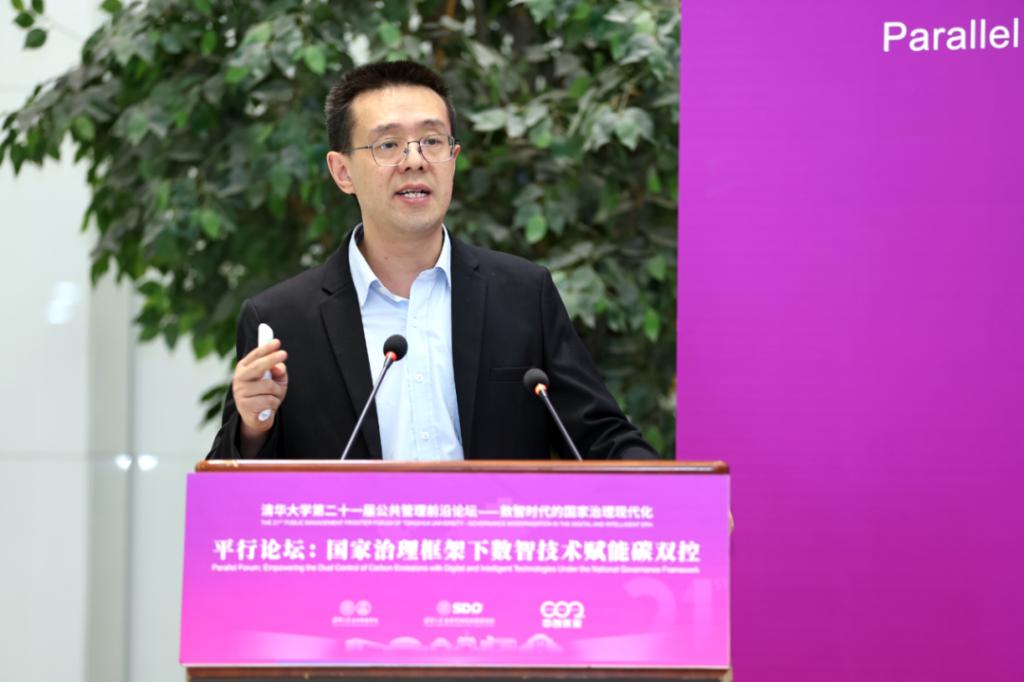
Keynote Presentation by Guo Wei
Guo Wei delivered a keynote presentation entitled "Understanding and Responding to Carbon Peaking and Carbon Neutrality Assessments During the 15th Five-Year Plan Period."
By examining the policy background, indicator framework, and implementation requirements of carbon peaking and carbon neutrality assessments during the 15th Five-Year Plan period, Guo highlighted the significant differences among Chinese regions in terms of industrial structures, energy resource endowments, and stages of development. He emphasized the importance of setting locally appropriate carbon emissions dual-control targets and developing implementation pathways tailored to regional circumstances.
He then systematically analyzed the key challenges facing local governments in implementing carbon emissions dual-control policies and proposed corresponding strategies across five dimensions: institutional mechanisms, energy structure, industrial transformation, digital and intelligent platforms, and market-based mechanisms.
Guo stressed the need for local governments to strengthen carbon emissions accounting and dynamic monitoring systems, promote the development of zero-carbon industrial parks and factories, and improve the operation of the national carbon market. He also advocated task-based management, quantitative performance assessments, and digital and intelligent management systems to ensure that carbon emissions dual-control targets are effectively implemented and deliver tangible results.
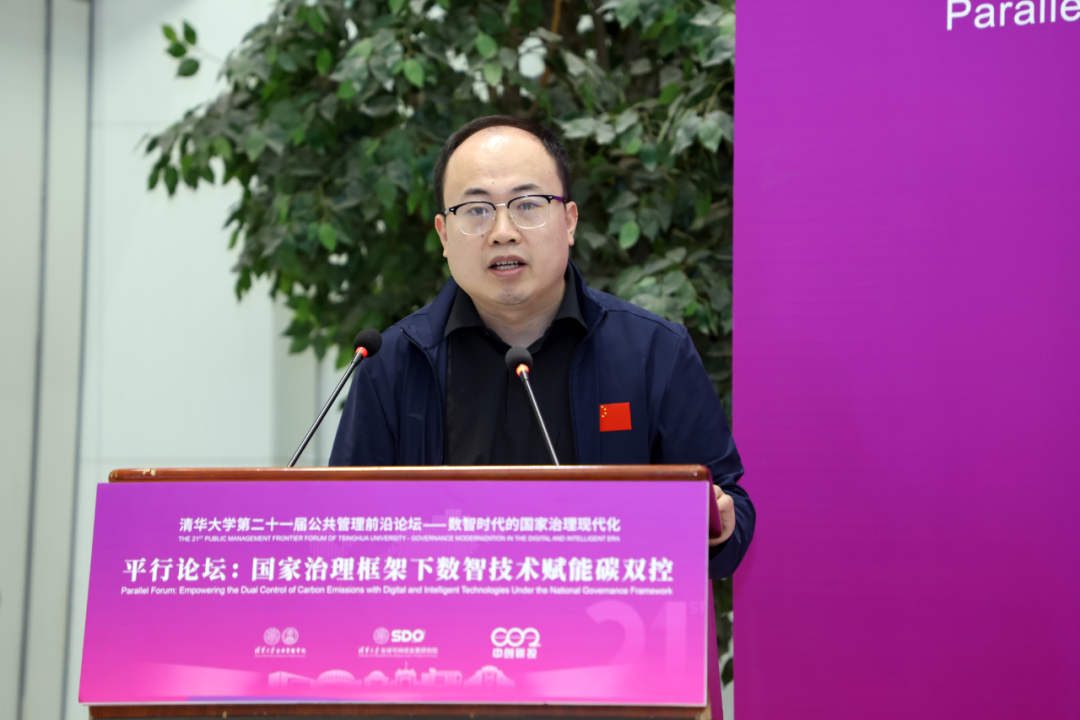
Keynote Presentation by Zhang Yang
Zhang Yang delivered a keynote presentation entitled "Technology Integration and Institutional Adaptation: The Logic and Optimization Pathways of Digital and Intelligent Empowerment for Carbon Emissions Dual Control Within the National Governance Framework."
He pointed out that the transition from the dual control of energy consumption to the dual control of carbon emissions involves more than a change in the objects of regulation. It also places new demands on China's national governance system and governance capacity.
Zhang elaborated on the application of digital technologies, including the Internet of Things, artificial intelligence, satellite remote sensing, and blockchain, throughout the processes of carbon emissions monitoring, accounting, early warning, and decision-making.
He also examined practical challenges facing the digital and intelligent transformation of carbon governance, including inconsistent data standards, insufficient interdepartmental coordination, and substantial regional disparities in development.
To address these challenges, Zhang proposed strengthening digital and intelligent infrastructure, enhancing institutional coordination among stakeholders, promoting the co-evolution of technology and institutions, and improving incentive mechanisms for carbon governance.
He concluded by emphasizing that the effectiveness of technology-enabled carbon governance ultimately depends on the degree of alignment between technological capabilities and institutional arrangements.
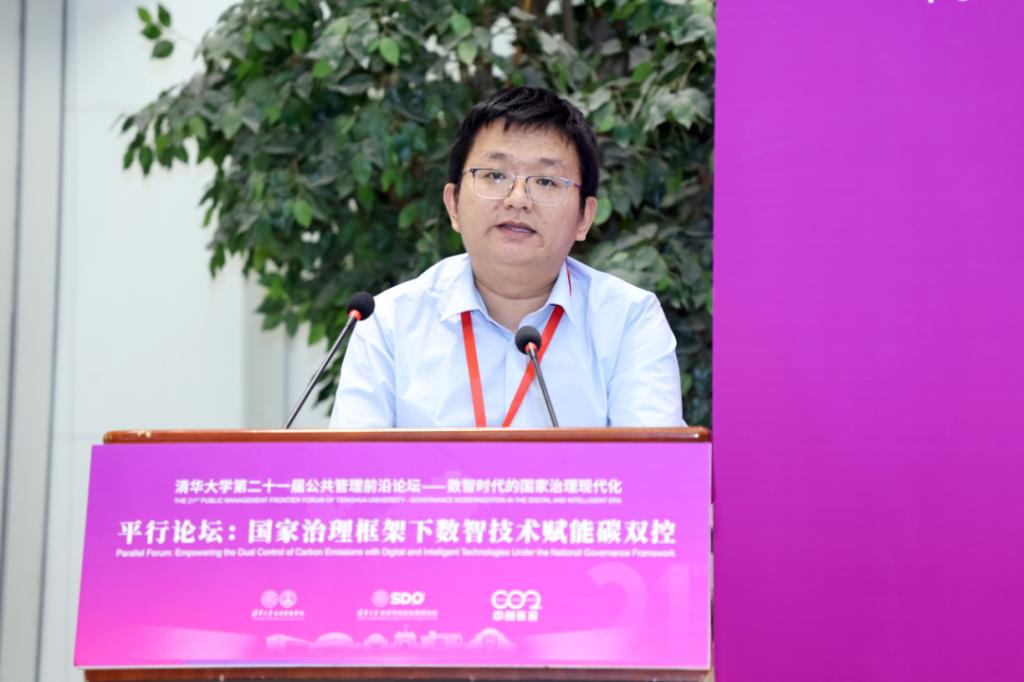
Keynote Presentation by Ma Zhen
Ma Zhen delivered a keynote presentation entitled "Between Mandates and Incentives: Breakdowns in the Transmission of Digital and Intelligent Carbon Emissions Dual-Control Policies—Insights from Frontline Practices in Shandong's Pilot Zone."
Drawing on green and low-carbon development practices in Shandong Province and findings from enterprise-level field research, Ma examined the practical obstacles encountered in transmitting carbon emissions dual-control policies from government authorities to businesses under China's carbon peaking and carbon neutrality goals.
He observed that while the current policy framework places considerable emphasis on administrative performance assessments and mandatory requirements, its implementation among small and medium-sized enterprises (SMEs) continues to face multiple challenges. These include insufficient incentive mechanisms, limited channels for converting carbon assets into economic value, and relatively high costs associated with digital transformation.
Ma recommended improving enterprise-level carbon data accounting and application mechanisms while reducing carbon management costs for SMEs through coordinated efforts by local governments and industrial parks.
He also called for the development of credible third-party professional service providers to facilitate a more effective transition from administrative requirements to market-based incentives in the implementation of carbon emissions dual-control policies.
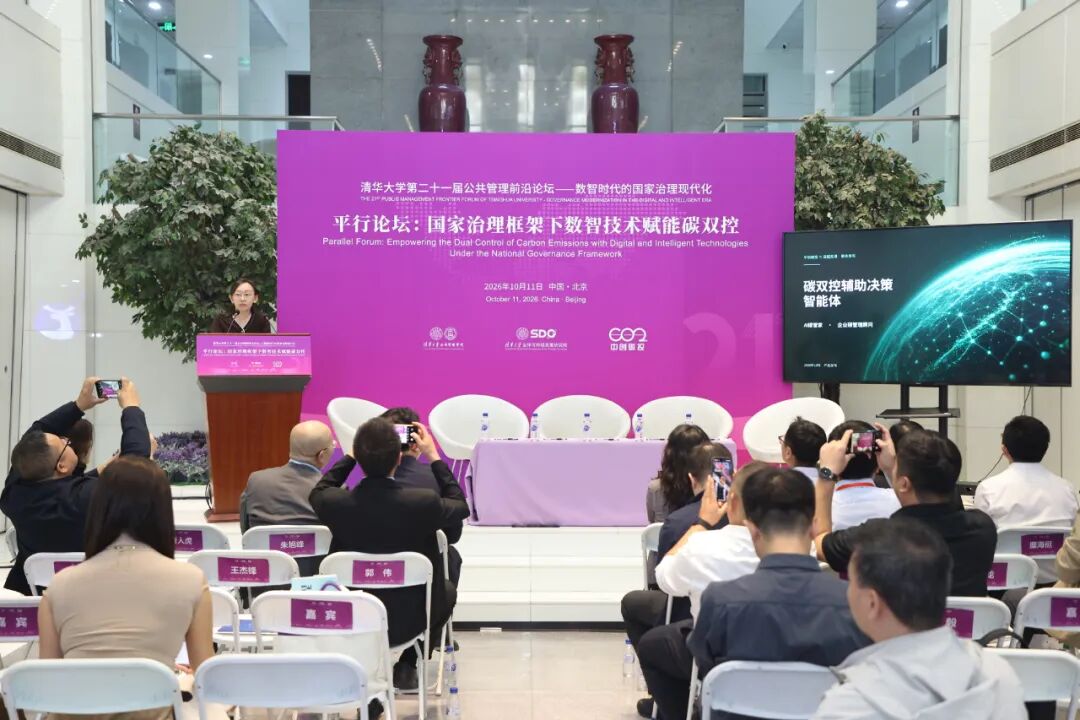
Launch of the Carbon Emissions Dual-Control Decision-Support AI Agent
During the results launch session, SinoCarbon Innovation & Investment Co., Ltd. and Beijing Yunqi Wuyin Technology Co., Ltd. jointly unveiled the "Carbon Emissions Dual-Control Decision-Support AI Agent."
Representatives of the joint research team presented the innovative outcomes of applying digital and intelligent technologies to carbon emissions dual-control governance. The launch also offered new perspectives on the potential applications of these technologies in future carbon governance practices.
The parallel forum also featured a roundtable discussion involving four senior experts from government and industry: Fei Jingyao, Wang Zhiyin, Tian Wang, and Mi Haiting.
The discussion focused on the practical implementation of carbon emissions dual-control policies and key considerations in performance assessment. The session was moderated by Associate Professor Zhang Fang.
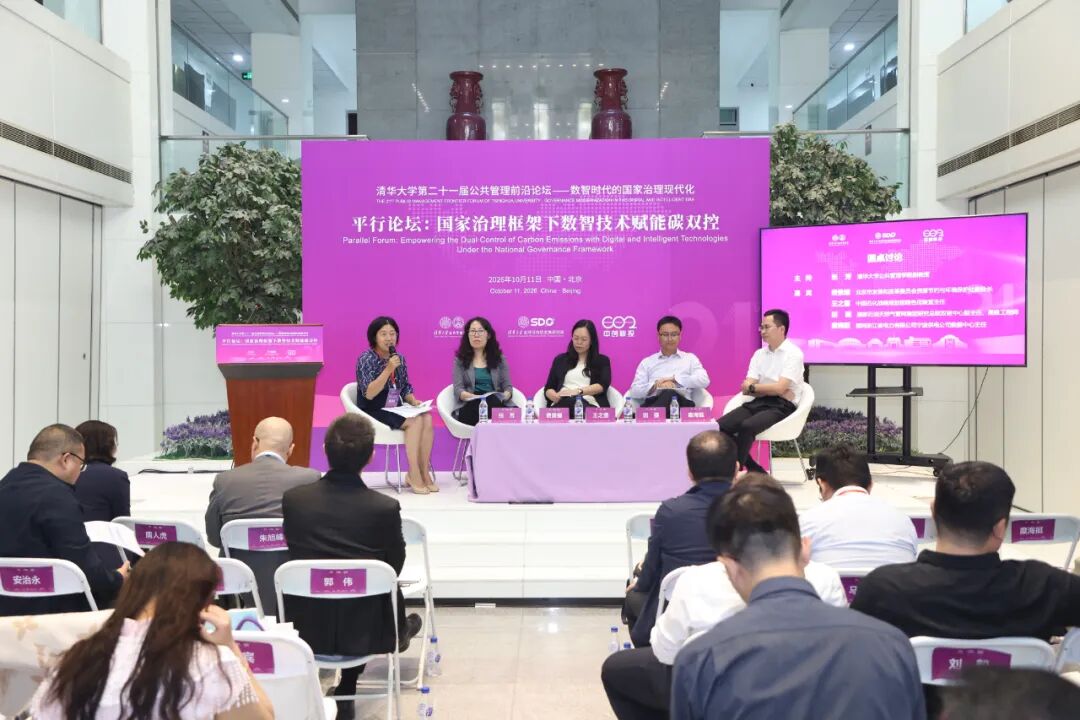
Roundtable Discussion
Fei Jingyao emphasized that carbon peaking and carbon neutrality assessments should not be regarded as constraints on development, but rather as important instruments for promoting high-quality development. He called for cultivating new drivers of green growth, leveraging policy guidance to mobilize market forces, and exploring market-based implementation mechanisms such as zero-carbon industrial parks. These efforts, he noted, could help translate carbon reduction initiatives into new opportunities for economic growth.
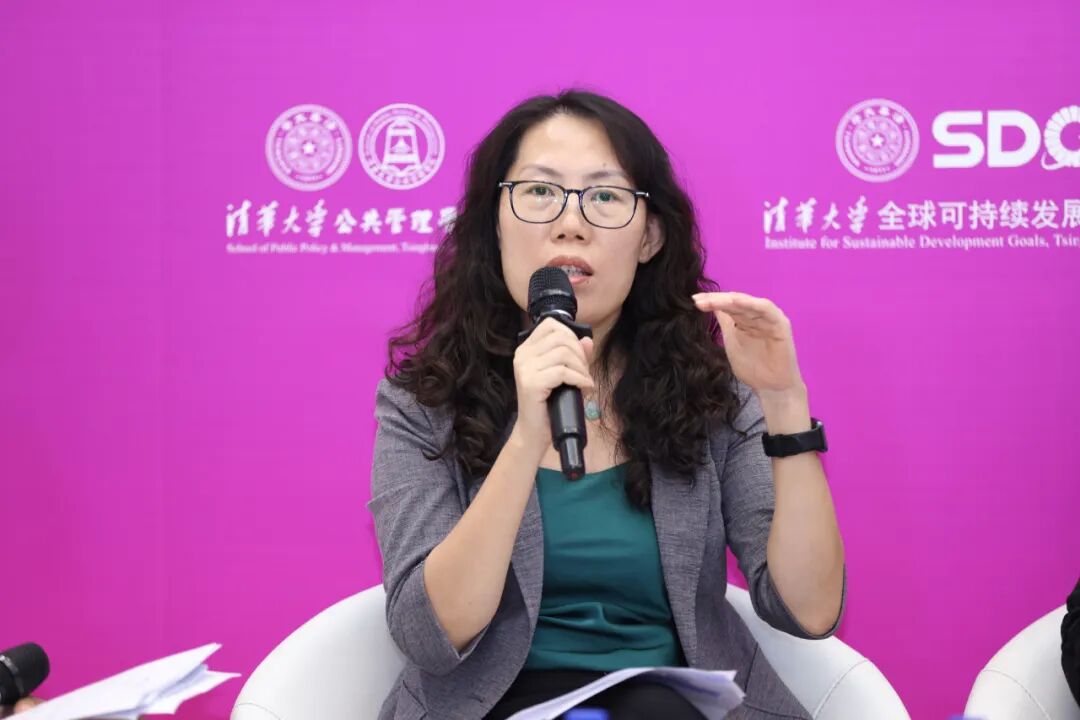
Fei Jingyao
Wang Zhiyin highlighted that the key to corporate responses to carbon emissions dual-control requirements lies in raising awareness and improving management capabilities. She emphasized the need to integrate carbon peaking and carbon neutrality objectives into corporate strategies, production and operations, and project-level decision-making. By doing so, enterprises could cultivate new growth opportunities while advancing their green and low-carbon transformation and high-quality development.
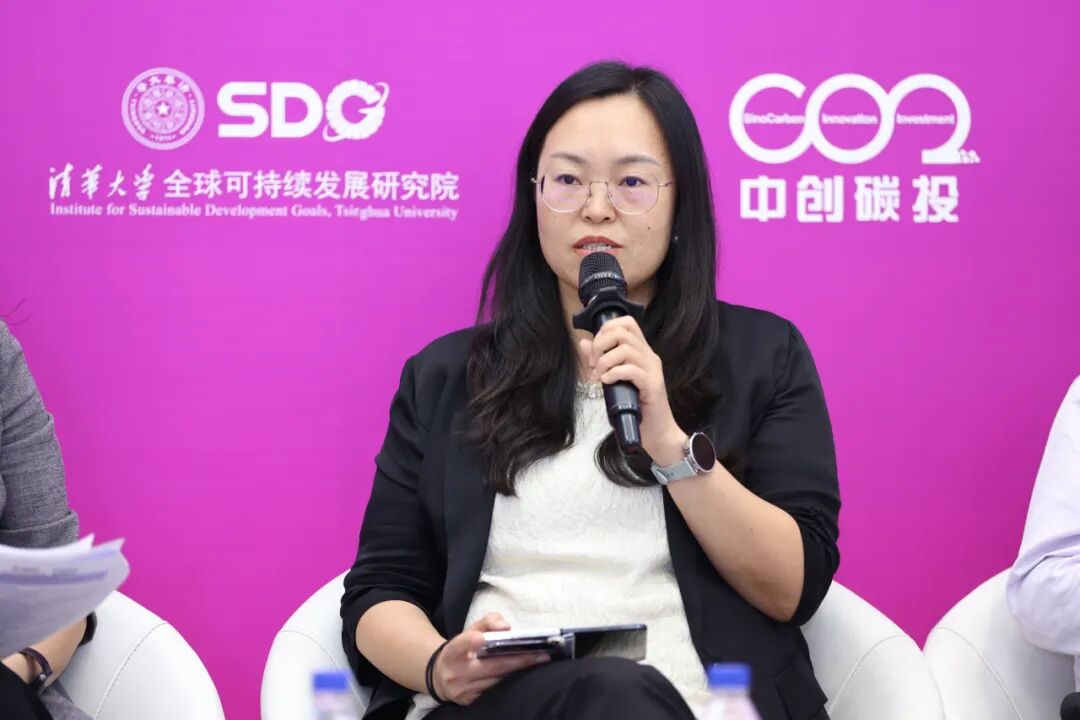
Wang Zhiyin
Tian Wang summarized the corporate response to carbon emissions assessments in two principles: "accurate quantification and efficient emissions reduction." He recommended using measured emission factors, optimizing green electricity procurement, establishing a database of emissions reduction technologies and measures, and incorporating carbon emissions assessments into the early stages of project planning and decision-making.
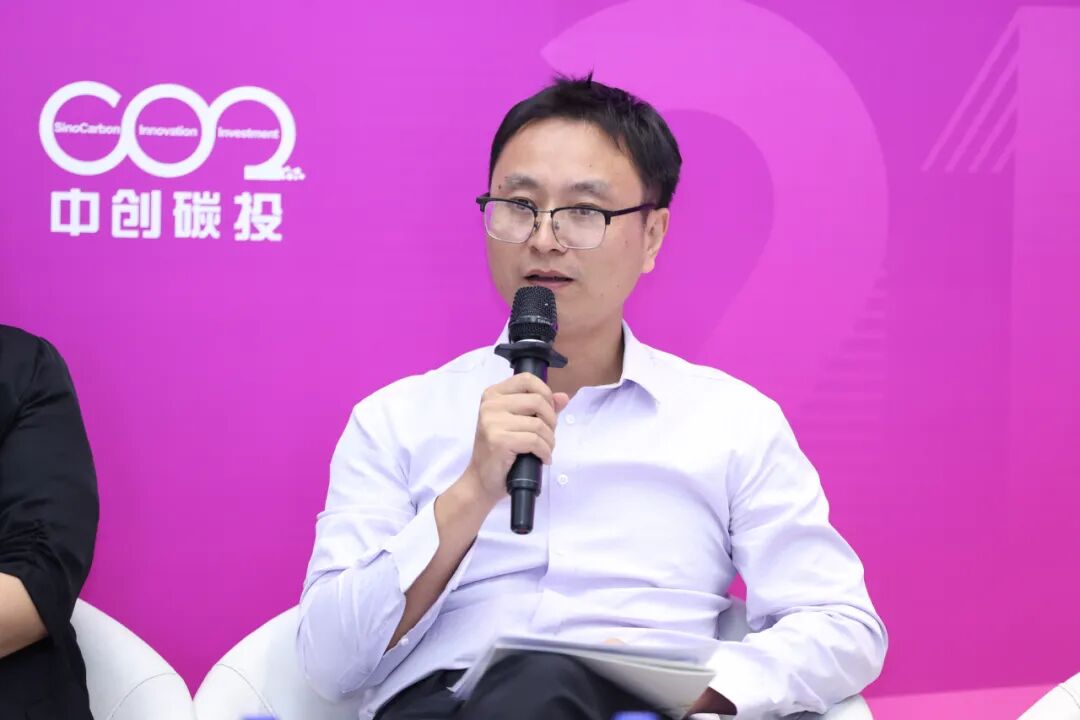
Tian Wang
Mi Haiting observed that existing policy mechanisms and technological solutions are relatively well developed, but the central challenge lies in achieving actual emissions reductions at the point of implementation. Large enterprises often face difficulties in making changes due to production processes and safety requirements, while micro, small, and medium-sized enterprises may lack either the confidence or the motivation to undertake such changes. He therefore called for accelerating the development of third-party service providers and market participants to support the implementation of carbon reduction measures.
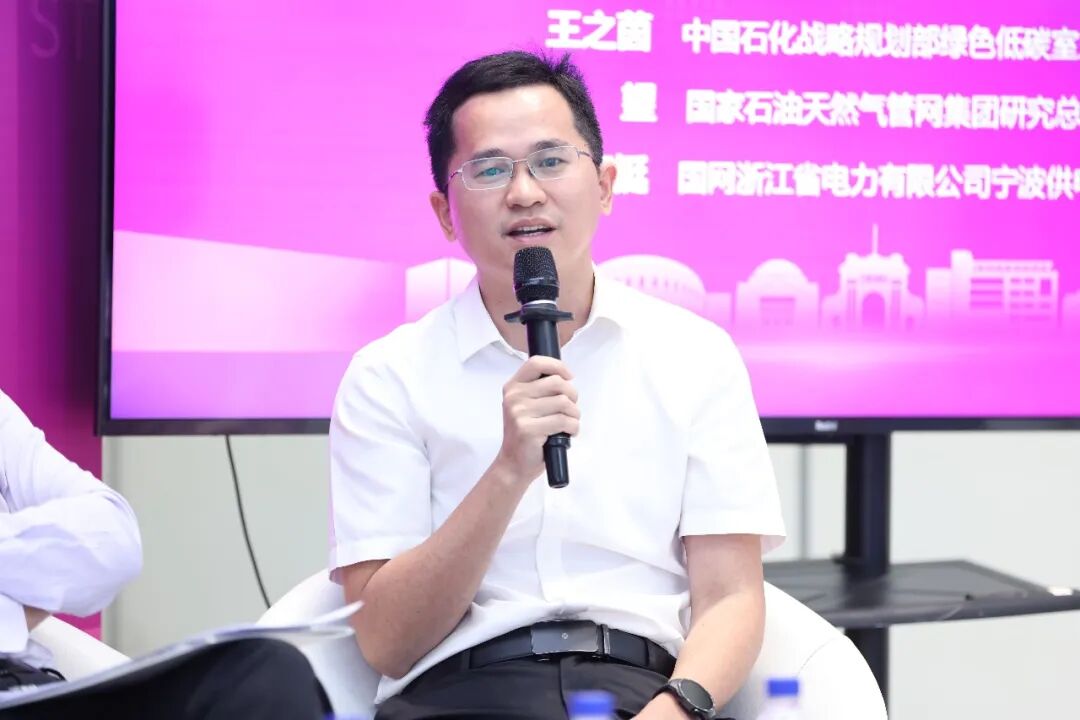
Mi Haiting
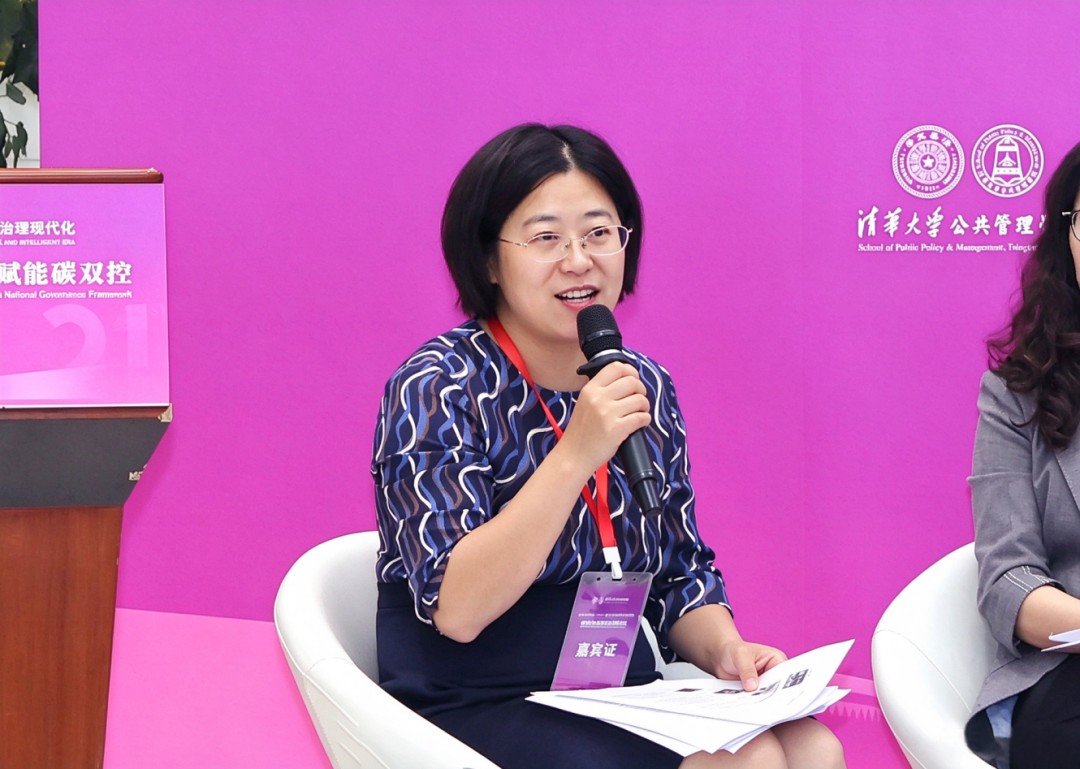
Associate Professor Zhang Fang Moderates the Roundtable Discussion
The parallel forum on "Empowering the Dual Control of Carbon Emissions with Digital and Intelligent Technologies Under the National Governance Framework," held as part of the 21st Tsinghua University Public Management Frontier Forum, concluded successfully.
Beginning with an examination of carbon emissions dual-control policies during the 15th Five-Year Plan period, the forum explored the application of digital and intelligent technologies in carbon governance and examined local implementation practices through in-depth roundtable discussions.
The forum sought to generate new insights into the development of actionable and practical implementation pathways and policy recommendations. It also provided valuable intellectual support for improving China's carbon emissions dual-control framework, advancing the modernization of national governance, and deepening the country's participation in global climate governance.
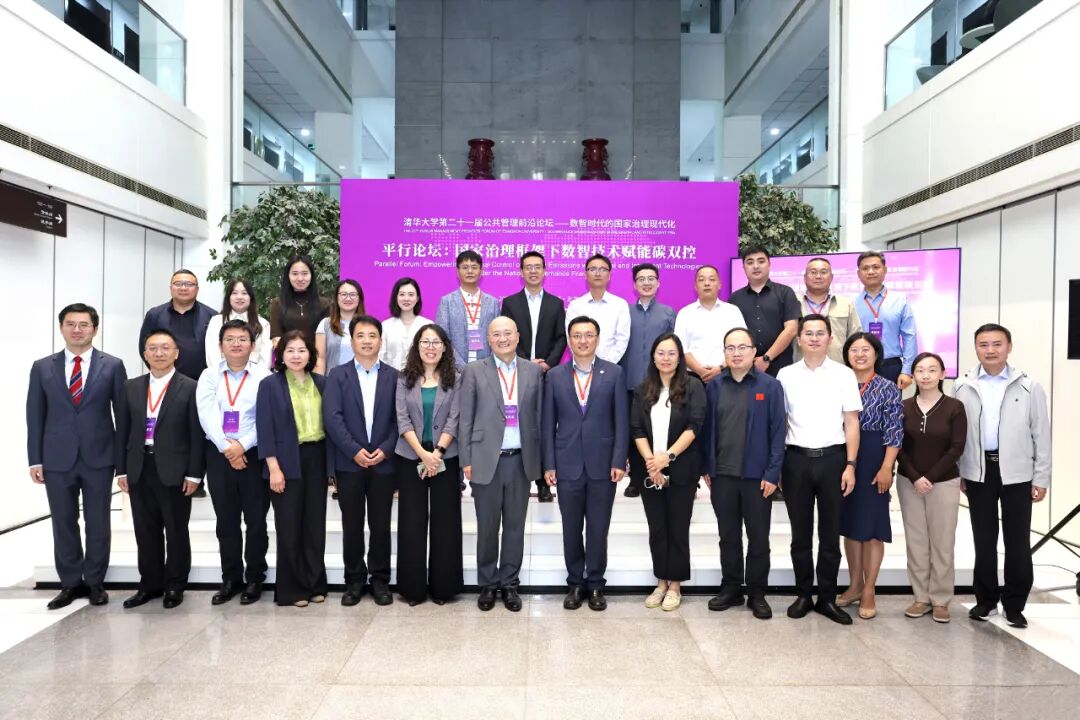
Group Photo of Forum Participants
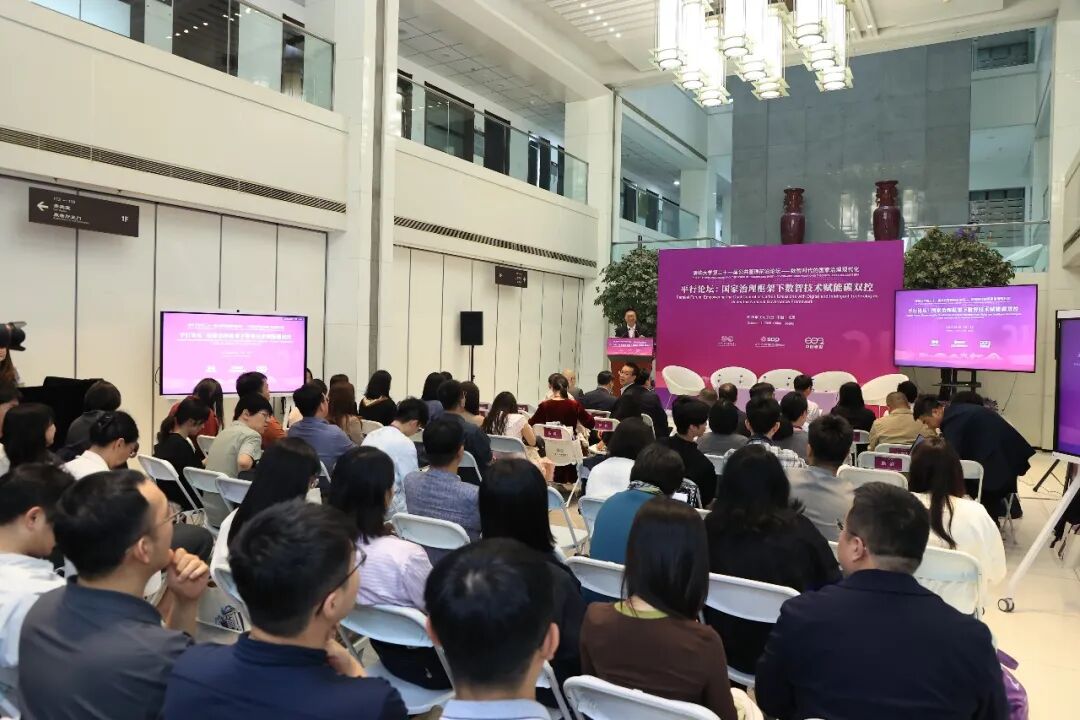
Forum Venue