On September 23 local time, Chinese Premier Li Qiang attended and addressed the High-Level Meeting on the Global Development Initiative, hosted by China, at the United Nations Headquarters in New York. UN Secretary-General António Guterres, Kazakh President Kassym-Jomart Tokayev, Iraqi President Abdul Latif Rashid, Angolan President João Lourenço, Prime Minister of Antigua and Barbuda Gaston Browne, Pakistani Prime Minister Shehbaz Sharif, Nigerien Prime Minister Ali Lamine Zeine, as well as ministerial officials from over 30 countries and heads of international organizations attended the meeting. Professor Lan Xue, Dean of the Schwarzman College at Tsinghua University, Director of the Institute for Sustainable Development Goals at Tsinghua University, and Director of the Institute for AI International Governance at Tsinghua University, was invited to attend the high-level meeting and spoke during the roundtable discussion.
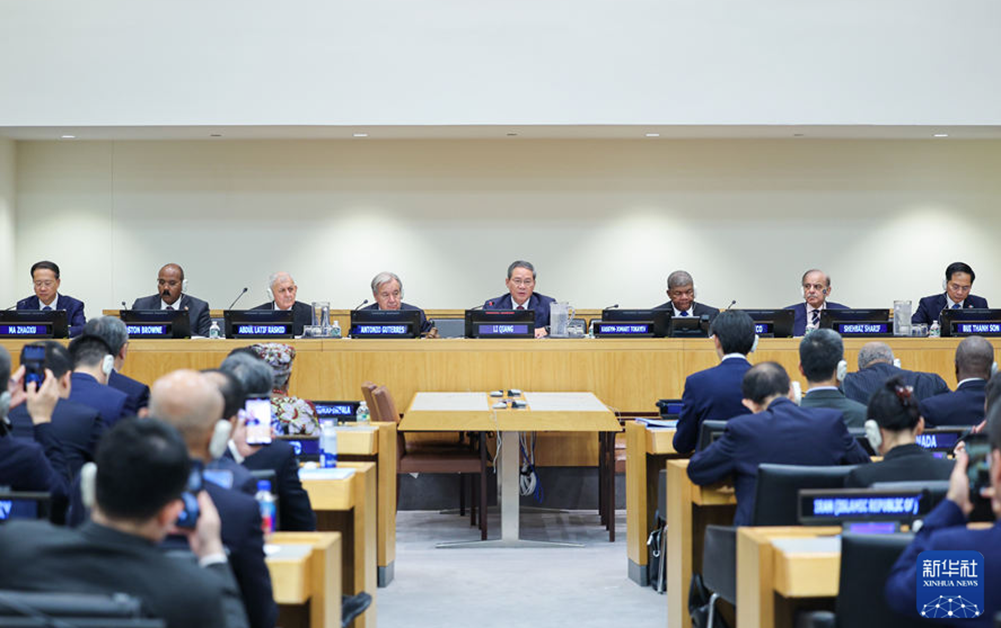
Premier Li Qiang Attended the Meeting and Delivered a Speech
Source: Xinhua News Agency
In his speech, Premier Li Qiang stated that development is the eternal theme of human society. Since its founding, the United Nations has written promoting global development into its Charter, and over the past 80 years, all parties have worked together to achieve remarkable results in global development. In 2021, President Xi Jinping proposed the Global Development Initiative (GDI) at the United Nations General Assembly, calling for adherence to the "Six Commitments." To date, more than 130 countries and international organizations have actively participated, making it a widely welcomed international public good. Facing challenges such as rising unilateralism and protectionism, and hindered global development cooperation, China advocates maintaining a focus on development and working together to achieve win-win outcomes. Premier Li Qiang put forward four proposals: first, to foster a stable and open international development environment and oppose "decoupling and severing supply chains"; second, to build a balanced and inclusive development partnership, calling on developed countries to fulfill their obligations and accommodate the needs of developing countries; third, to cultivate new drivers for innovative development, strengthen scientific and technological cooperation, and bridge the digital divide; and fourth, to promote green and low-carbon transformation and deepen cooperation in areas such as new energy. China will continue to increase investment and implement 2,000 "small and beautiful" livelihood projects in developing countries over the next five years to promote cooperation in health, digital capacity building, and green energy. Furthermore, China announced that it will no longer seek new special and differential treatment in World Trade Organization negotiations. At the same time, China proposed an "AI+" international cooperation initiative and established a special fund to promote projects such as Digital South and satellite observation, aiming to facilitate the global green transformation. Premier Li Qiang emphasized that China stands ready to work with all countries to rely on the Global Development Initiative, accelerate the implementation of the UN 2030 Agenda for Sustainable Development, and create a more prosperous and beautiful future.
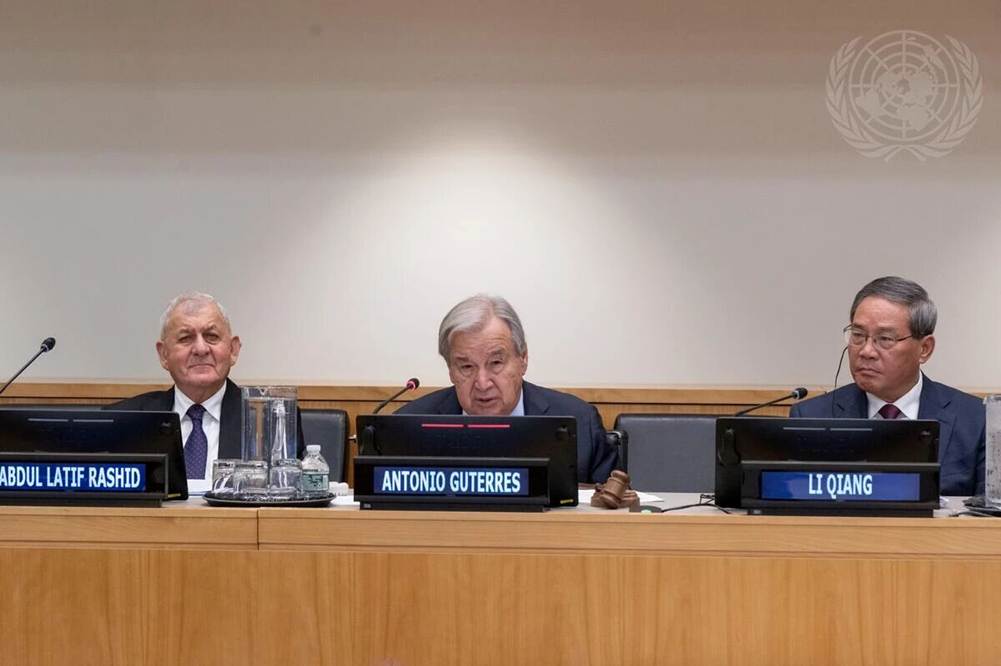
Meeting Venue
Source: United Nations
The two-and-a-half-hour meeting was held in the form of a high-level dialogue. Representatives from various countries exchanged views on issues such as ensuring no country is left behind in the development process and building a more inclusive global partnership for development. The roundtable discussion focused on three core themes: concrete actions to accelerate the implementation of the 2030 Agenda for Sustainable Development, strategic partnerships for the development and revitalization of the Global South, and the role of artificial intelligence in development. As a representative of the academic community, Professor Lan Xue shared China's practical experiences and theoretical insights on AI international governance during the roundtable discussion. Other attendees of the roundtable discussion included Luo Guoqiang, Vice President of the Development Research Center of the State Council; Mulambo Haimbe, Minister of Foreign Affairs and International Cooperation of Zambia; Bruno Rodríguez Parrilla , Minister of Foreign Affairs of Cuba; and Gerd Müller, Director General of the United Nations Industrial Development Organization.
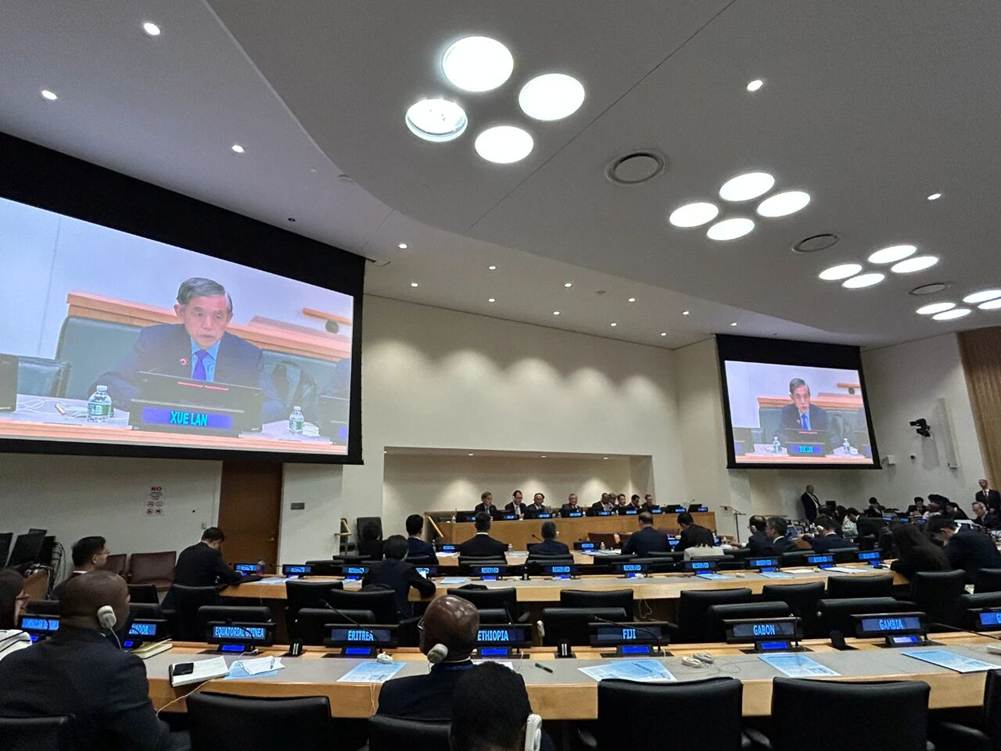
Professor Xue Lan Attends the Meeting and Speaks During the Roundtable Discussion
Source: ZK
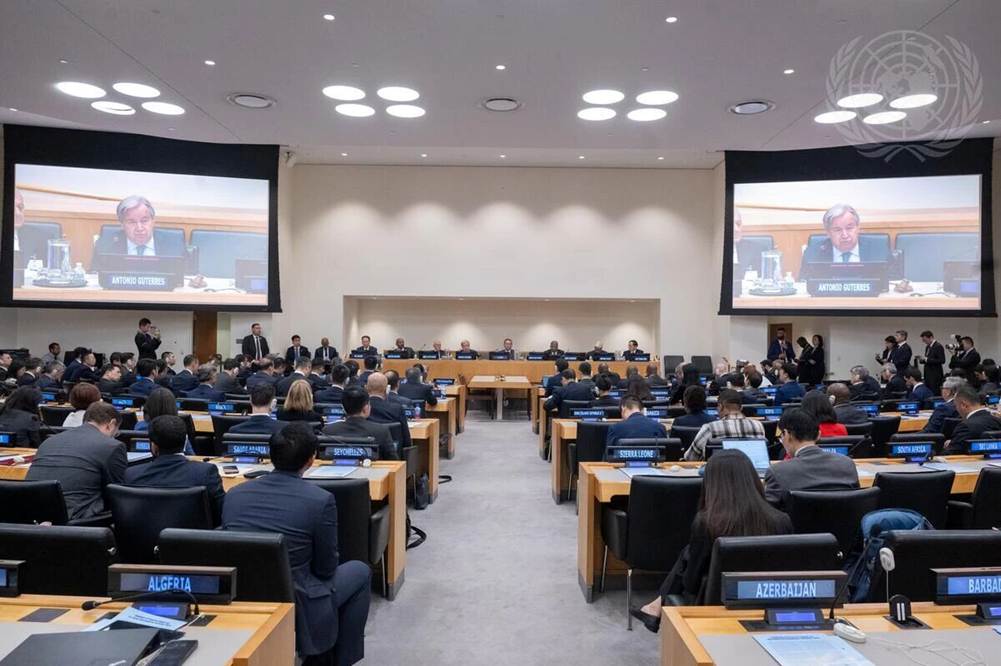
Meeting Venue
Source: United Nations
Held on the occasion of the 80th anniversary of the founding of the United Nations and hosted by China during the general debate of the 80th session of the UN General Assembly, this conference carries distinct contemporary significance and global influence. At this historic juncture, the meeting not only responds to the high attention of the international community to development issues, but also provides an important opportunity for building consensus and promoting cooperation. Through in-depth discussions centered on implementing the 2030 Agenda for Sustainable Development, promoting the revitalization of the Global South, and advancing the inclusive application of artificial intelligence in development, participating parties collectively demonstrated their determination and action to work together to address global challenges and create a better future.